
AKITSORA GAMING

Ten-Thousandfold

One grain, two, four… the abacus climbs all the way to ten thousand koku.

Ten-Thousandfold is a 5×3 ways slot. 2 or more go stones double the spin's win; in the bonus, every doubling card doubles the global multiplier, up to 10,000 koku ×1,024.

Demo play uses virtual credits with no monetary value.

RTP
96.46%
Volatility
Very high22.74
Max win
10,000× bet
Bonus buy
158.844 / 612.406× bet

In-game screens

Captured straight from the running game — real boards, real wins.

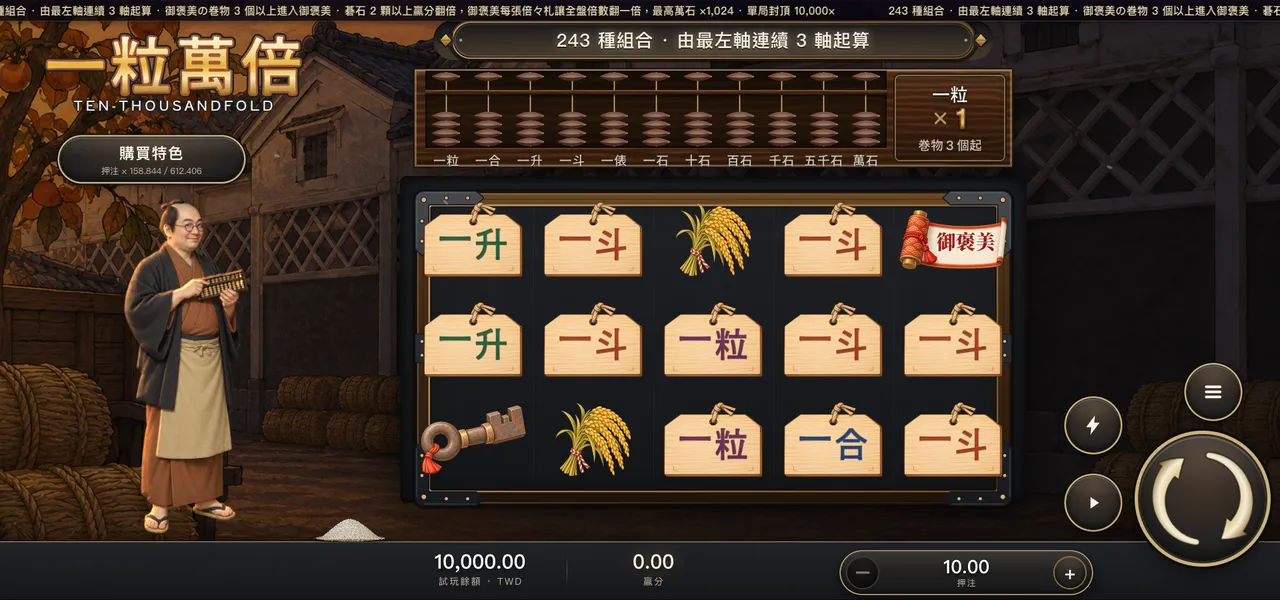
Ten-Thousandfold — The rice storehouse
The rice storehouseA 5×3 board with the great abacus above it counting the multiplier in rice units.
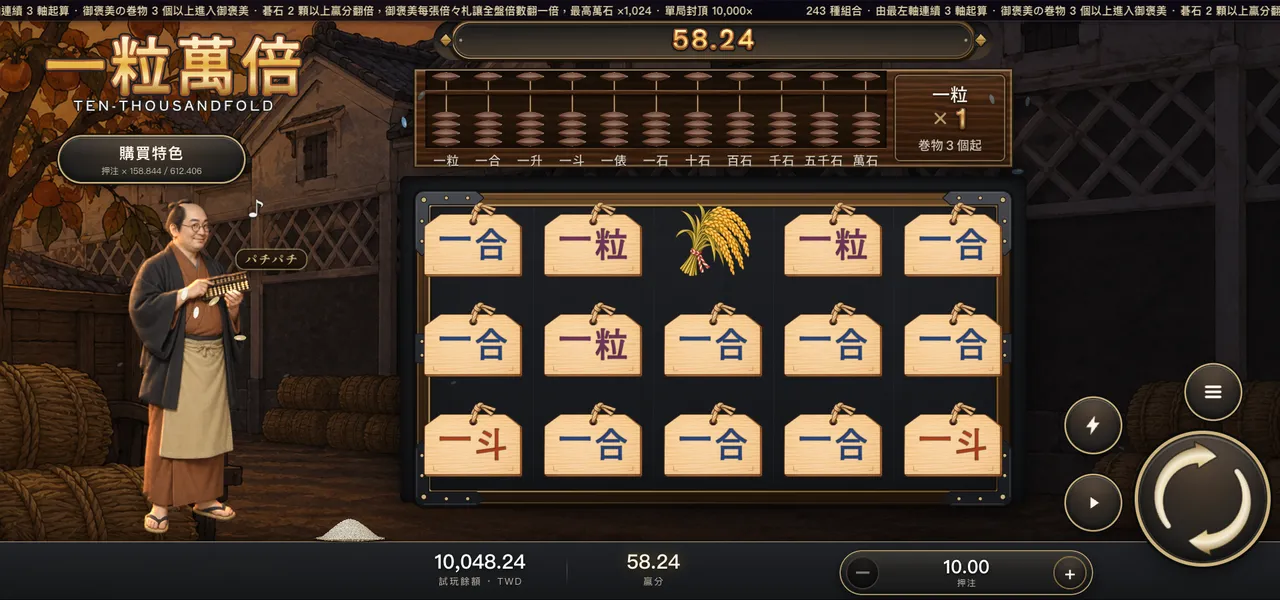
Ten-Thousandfold — Stone doubling
Stone doubling2 or more go stones double the spin's win.
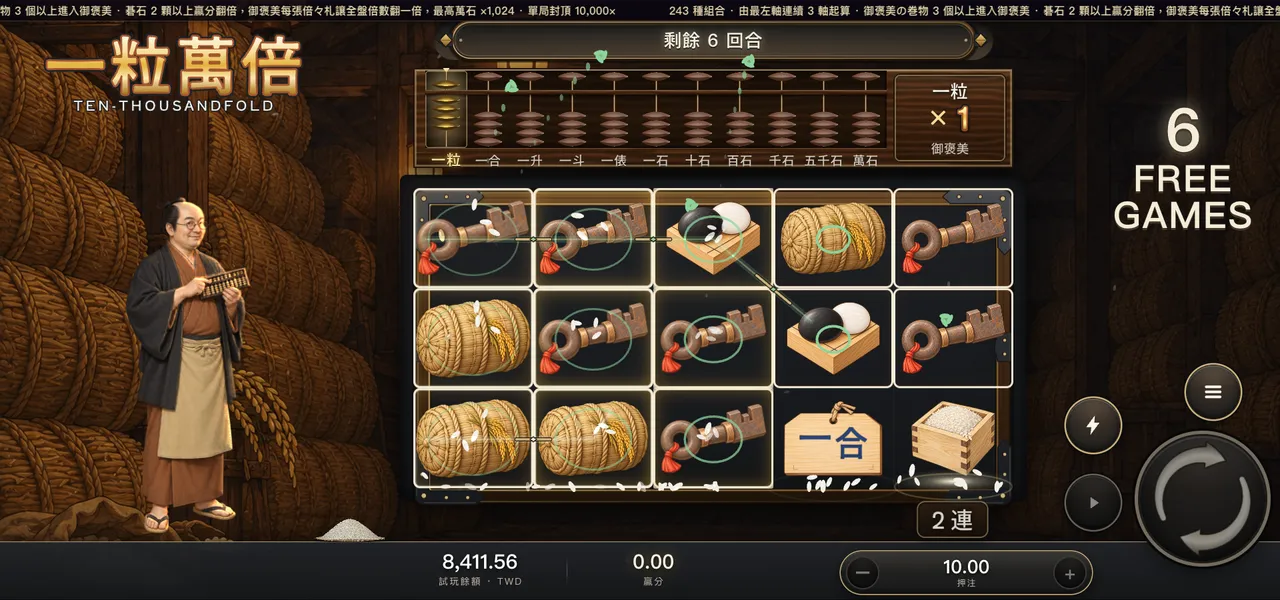
Ten-Thousandfold — Reward
RewardEvery doubling card moves the abacus up one rod and doubles the global multiplier.
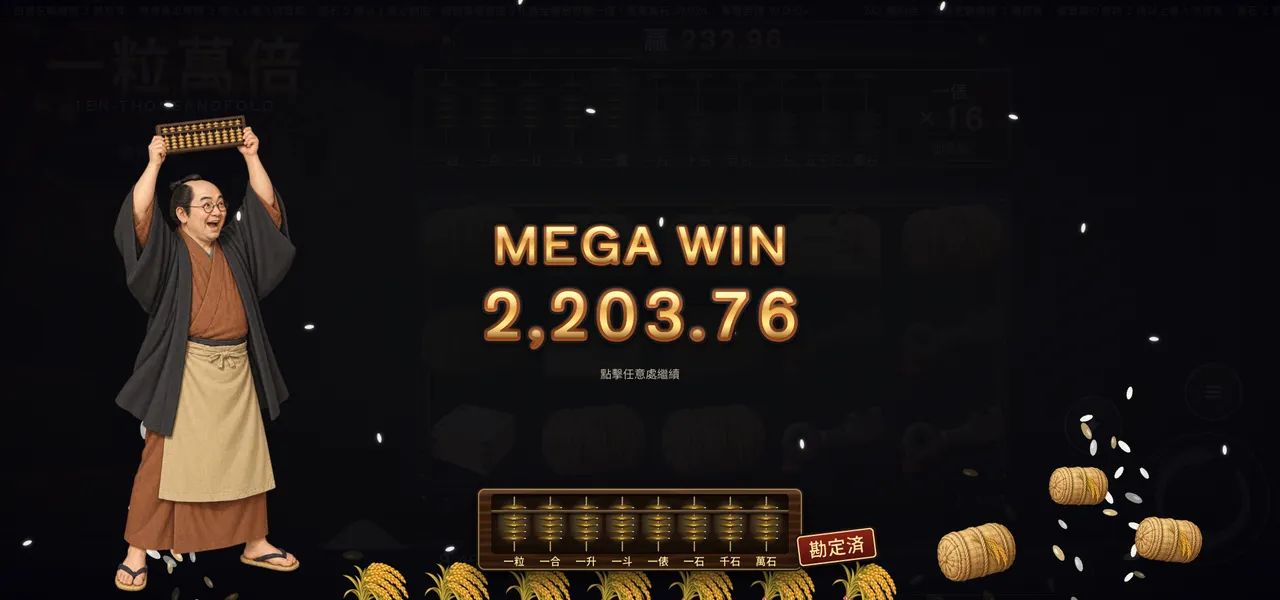
Ten-Thousandfold — Big win
Big winA single round is capped at 10,000× the bet.
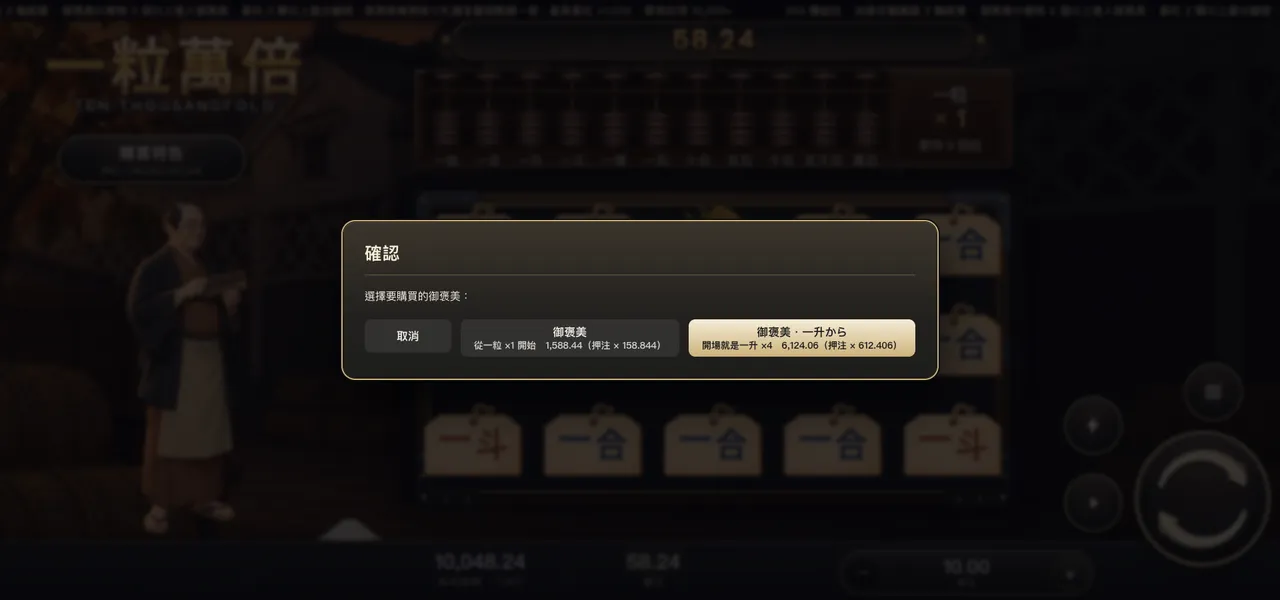
Ten-Thousandfold — Buy the Reward
Buy the RewardTwo options: ×158.844, or ×612.406 starting at 1 shō.
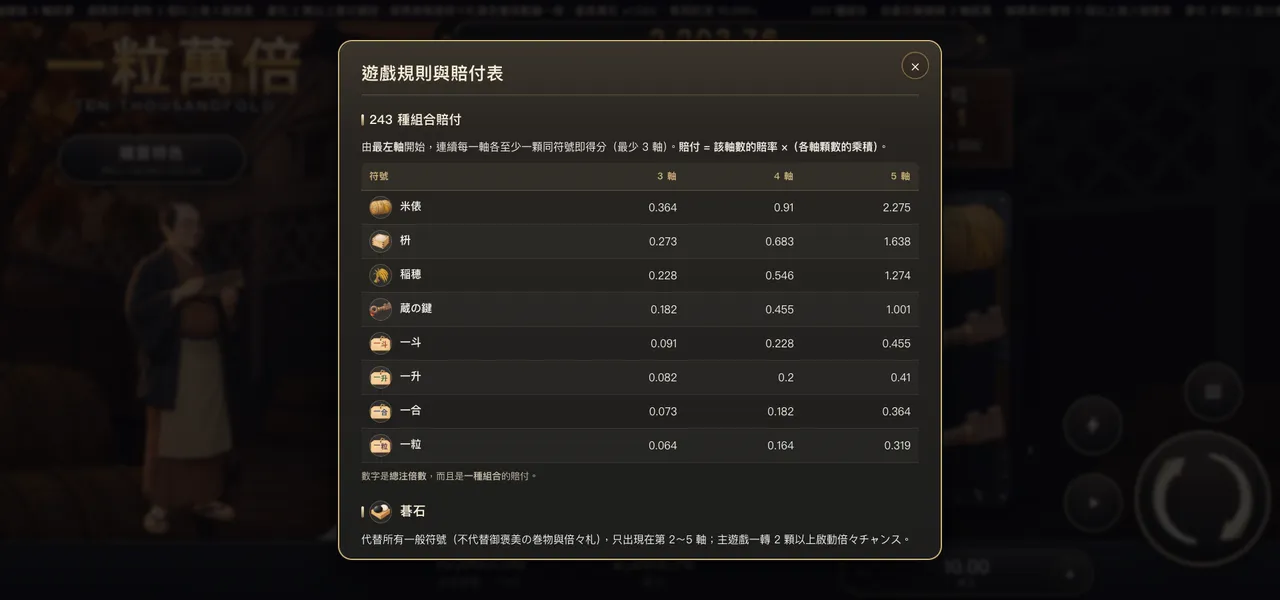
Ten-Thousandfold — In-game paytable
In-game paytableThe RGS supplies the units, the cap and the triggers; this page reads the same game definition.

Specification

Type5 reels × 3 rows, 243 ways starting with 3 consecutive reels from the left, with a doubling multiplier
Return to player (RTP)96.46%
Bonus buy RTP (Reward)96.46%
Bonus buy RTP (Reward · starts at 1 shō)96.46%
VolatilityVery high (22.74)
Hit rate28.50%
Rounds winning ≥ 1× bet9.06%
Max win per round10,000× bet
Reward (free spins) frequency≈ 1 in 287.47 spins
RTP verificationExact solution: base game and feature computed exactly (not sampled); the max-win cap's 0.3893 percentage points are estimated by simulation; RTP 96.4560%

Game math specifications and the paytable are read at build time from the definitions shared with the server code. See Math version for the configuration shown; confirm any other version or operator-specific settings separately.

How wins work

  • The board has 5 reels × 3 rows and 243 ways, with no fixed paylines. Matching symbols on at least 3 consecutive reels from the left pay; go stones substitute for regular symbols.
  • Read the paytable by the number of winning reels, then multiply by the matching-symbol count on each reel.
  • Go stones appear on reels 2–5 only. When 2 or more land in the base game, the spin's ways win is multiplied by 2 to the power of (stones − 1), up to ×8.
  • During the bonus, the abacus above the reels shows the global multiplier in rice units: 1 grain ×1 → 1 gō ×2 → 1 shō ×4 → 1 to ×8 → 1 bale ×16 → 1 koku ×32 → 10 koku ×64 → 100 koku ×128 → 1,000 koku ×256 → 5,000 koku ×512 → 10,000 koku ×1,024.

Paytable

Values are total-bet multiples for a single combination: win = total bet × table value × the product of matching-symbol counts on the winning reels. Go stones (wild) count as matching symbols. Stone doubling and the bonus multiplier then multiply the spin's ways win. These are the same values shown in game.

Symbol3 reels4 reels5 reels
Rice baleHigh-pay 0.3640.912.275
Rice measureHigh-pay 0.2730.6831.638
Rice earsHigh-pay 0.2280.5461.274
Storehouse keyHigh-pay 0.1820.4551.001
To tagLow-pay 0.0910.2280.455
Shō tagLow-pay 0.0820.20.41
Gō tagLow-pay 0.0730.1820.364
Grain tagLow-pay 0.0640.1640.319

Special symbols

Go stone

Wild. Reels 2–5 only; substitutes for regular symbols and counts toward matching symbols. It does not replace scrolls or doubling cards. 2 or more in a base spin trigger stone doubling.

Reward scroll

Scatter. No connection required: 3 or more start the Reward; 3 or more during the bonus add 3 spins.

Doubling card

Bonus only. Every card doubles the global multiplier, up to 10,000 koku ×1,024.

Features

Stone doubling

2 go stones in a base spin: win ×2; 3 stones ×4; 4 stones ×8. Each stone clicks onto the board and the capsule shows the spin's multiplier.

Reward — doubling cards

3 or more reward scrolls start the Reward: 3/4/5 scrolls → 8/10/12 spins; 3 or more during the bonus add 3 spins. The global multiplier starts at ×1 and doubles for every doubling card that lands (two cards in one spin double it twice). It doubles first, then multiplies that spin's win and every spin after it. It never goes down.

Ten thousand koku — the top multiplier

The multiplier stops at 10,000 koku (×1,024): the storehouse doors swing open, rice bales tumble out and the head clerk raises his abacus high. Further cards no longer double it.

Volatility and win distribution

RTP 96.46%, volatility 22.74. These rates use complete rounds started by a regular bet, including naturally triggered free-spin awards; bonus buys are counted separately. The 28.50% hit rate counts any winning round; 9.06% of all rounds return at least the stake. Maximum win is 10,000× the bet per round, including that round's accumulated free-spin wins.

Buy the Reward — two options

Pay 158.844× the bet to start 8 spins at ×1 (bonus-buy RTP 96.46%), or 612.406× to start at 1 shō ×4 (bonus-buy RTP 96.46%). Both are priced from the expected value of the purchase route and calibrated separately from regular play.

Technical

Game codeaki_ichiryu
Math versionir1
TechnologyHTML5, no plug-in; one client for desktop and mobile
ViewportLandscape with proportional scaling
In-game languageTraditional Chinese (additional languages on request)
CurrenciesTWD (others can be registered on request)
IntegrationTransfer wallet (Operator API v3), launch-token redirect

Sources & verification scope

This product specification is written and maintained by its developer, Akitsora Gaming (AKI電子 in Taiwan). Measurement methods and sample information for RTP, volatility and hit rate appear in the specification table. Sampled results have uncertainty; RTP describes long-run return, not an individual player or session outcome.

Internal simulations and tests are not independent certification. We do not currently hold GLI or BMM certification reports. Supply to a market requiring third-party certification depends on completing its requirements.

See slot game development and supply for integration and supply scope, About us for development and content responsibility, or contact us for a math summary, version confirmation or a correction to this page.

The story

Fiction and adapted settings written by Akitsora Gaming for this title, including invented dialogue and events. This is not a historical or folklore reference. The rules and specification tables define the gameplay and math.

One grain of rice on the first square, two on the next, four on the third,
— a humble request that climbs the abacus all the way to ten thousand koku.

I. The Abacus at the Rice Merchant's Yard

At dusk in an Edo rice merchant's courtyard, plump straw rice bales stand stacked in neat rows before a whitewashed storehouse with black-and-white namako tile walls. Beneath the timber eaves, the head clerk adjusts his round spectacles, opens his ledger, and flicks the wooden beads of his long abacus with a crisp clatter across the yard. Warm lantern light spills across the cobblestones as clerks tally the autumn harvest brought in from the provinces.

The game draws its inspiration from the classic Japanese tale of the clever retainer who asked his lord for a seemingly modest reward: a single grain of rice on the first square of a go board, doubled on each square thereafter. Above the reels hangs the great abacus that tracks that exponential climb. What begins as a single humble grain on the first square soon outgrows bowls, barrels, and entire storehouses.

II. Go Stones Clicking on the Board

Polished black-and-white go stones land across the reels alongside golden rice ears, wooden measuring boxes, and straw sacks during the base game. Acting as wilds that substitute for regular symbols to complete ways from the leftmost reel, they also serve as the spark for the stone doubling feature. Their smooth slate and clamshell surfaces gleam against the timber reels as the clerk prepares to count the combinations.

Whenever two or more go stones land on the same base spin, each stone clicks onto the grid with a sharp snap and doubles the spin's ways win in powers of two — turning two stones into double, three into fourfold, and climbing higher with every extra stone that lands. Hearing those stones click into place one after another brings the simple power of doubling to life on the main board.

III. The Lord's Reward and Doubling Cards

Landing enough reward scrolls anywhere on the stopped board unrolls the lord's decree and begins the Reward free spins. The great wooden abacus above the grid starts at a single grain of rice, waiting for wooden doubling cards to appear on the reels as they spin. Brass fittings on the great abacus catch the lantern light as the retainer's legendary reward gets underway.

Each doubling card that lands flicks the abacus up a full notch, doubling the global multiplier from one grain through traditional rice measures — gō, shō, to, and bale — toward hundreds and thousands of koku. The multiplier never resets between spins and multiplies every win that follows. Every flick of the wooden beads marks another doubling of the harvest, carrying the count higher with each card that lands.

IV. Opening the Ten-Thousand-Koku Storehouse

As wooden doubling cards continue to land across the free spins, the rice units on the abacus leap higher and the merchant's courtyard buzzes with anticipation. Reaching the top mark of ten thousand koku crowns the entire feature with its grandest spectacle as every bead on the abacus gleams with gold. What started as a single grain of rice on the corner of a board has grown into a lordly domain of golden grain.

At that moment, the heavy doors of the whitewashed rice storehouse swing wide open, golden rice bales pour out like a waterfall across the yard, and the head clerk raises his abacus high in triumph — a fortune grown from a single grain of rice. Amid the clatter of the abacus and the glow of overflowing bales, the merchant's yard celebrates a truly ten-thousandfold harvest.

Want to spin Ten-Thousandfold yourself?

The demo needs no account — click and spin. For integration docs, the math summary or sandbox access, send us an email.

Demo play uses virtual credits with no monetary value.