






The story
Fiction and adapted settings written by Akitsora Gaming for this title, including invented dialogue and events. This is not a historical or folklore reference. The rules and specification tables define the gameplay and math.
Bottom of the ninth under a clear sky, every seat in the stands packed tight,
as the catcher flashes the sign and the whole stadium watches the pitcher's glove.
I. Stepping Onto the Four Corner Bases
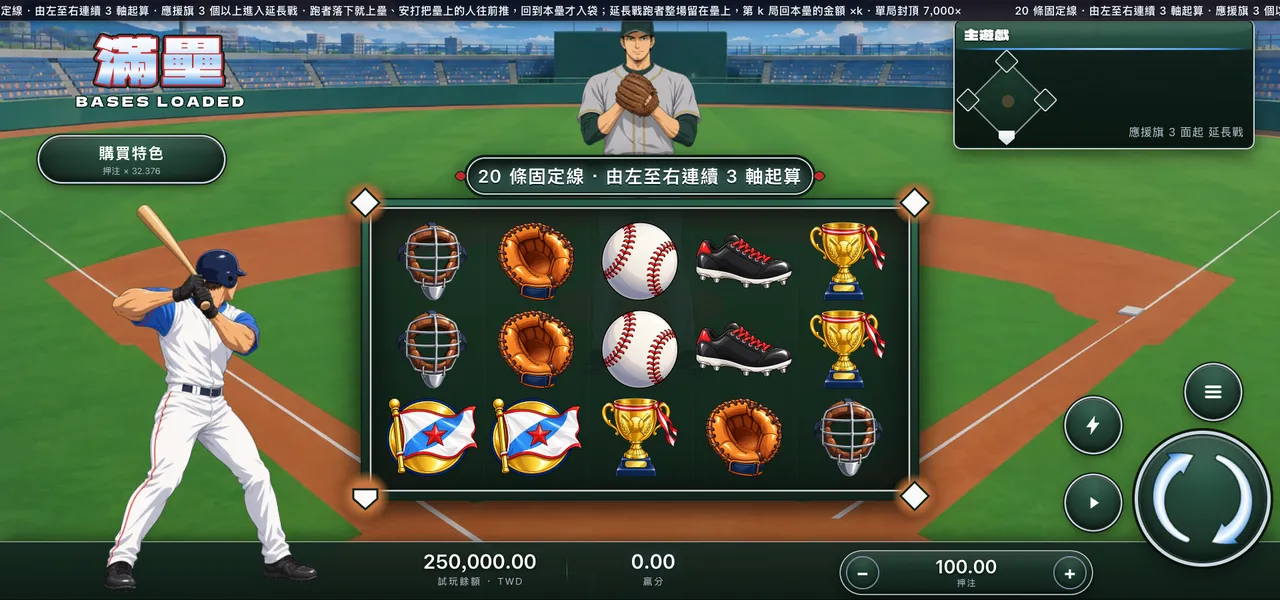
Brass bands blare from the packed bleachers under a bright summer sky, and the freshly watered dirt of the infield gleams around four white bags. The four corners of the reel frame are the baseball diamond itself: first base sits at the bottom right, second at the top right, third at the top left, and home plate at the bottom left. Banners flutter in the warm stadium breeze while the crowd claps in rhythm with the brass section in the stands.
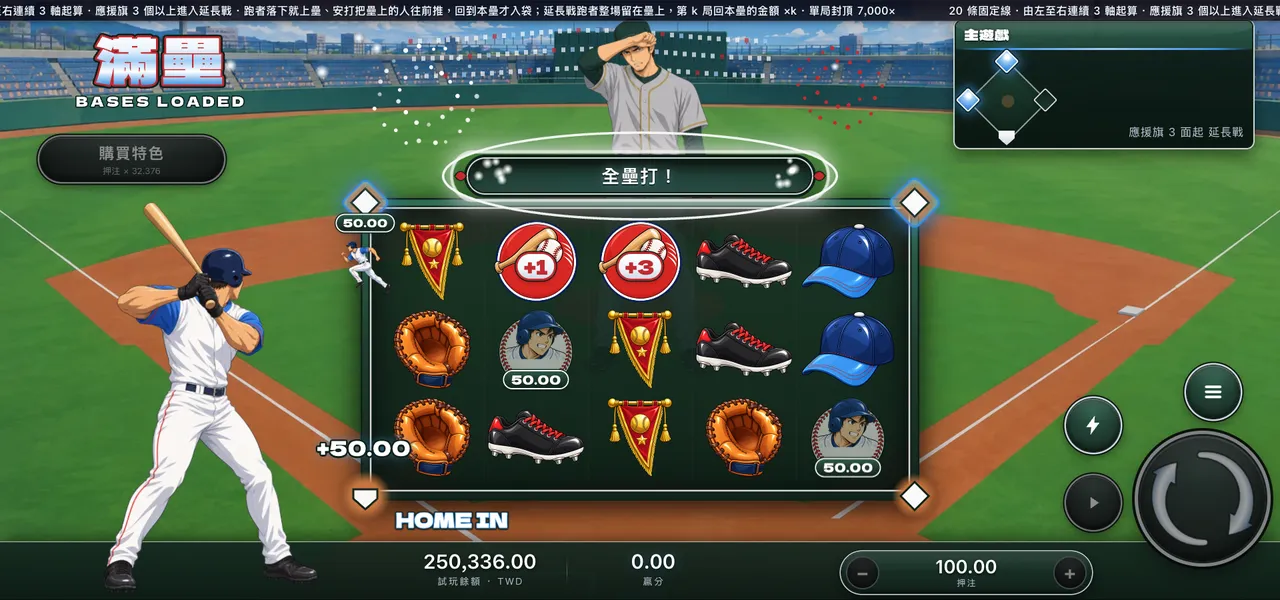
Every runner symbol lands on the reels carrying a cash prize and sprints straight to first base, forcing any teammate already on base one bag ahead around the frame. If all three bases are already occupied, one more runner walks in a run and forces the runner on third home. Watching runners round the corners of the reel frame turns every spin into a live inning on the diamond.
II. Driving the Runners Home with a Hit
In baseball, reaching base is only half the journey — a run only counts when a runner touches home plate. Once every runner on the spin has taken a bag, the hit symbols step up to the plate, adding up singles, doubles, triples, and four-base home runs into a combined advance. The crack of the wooden bat echoes across the infield as the ball streaks past the diving shortstop into the outfield grass.
Every runner standing on the diamond sprints forward by that combined advance, slamming their cash prize into the scoreboard one by one as they cross home plate. In the base game each spin begins with empty bases, so runners left stranded on the bags do not score. When several runners cross the plate on the same big hit, they charge home one after another to the roar of the crowd.
III. Extra Innings and the Grand Slam
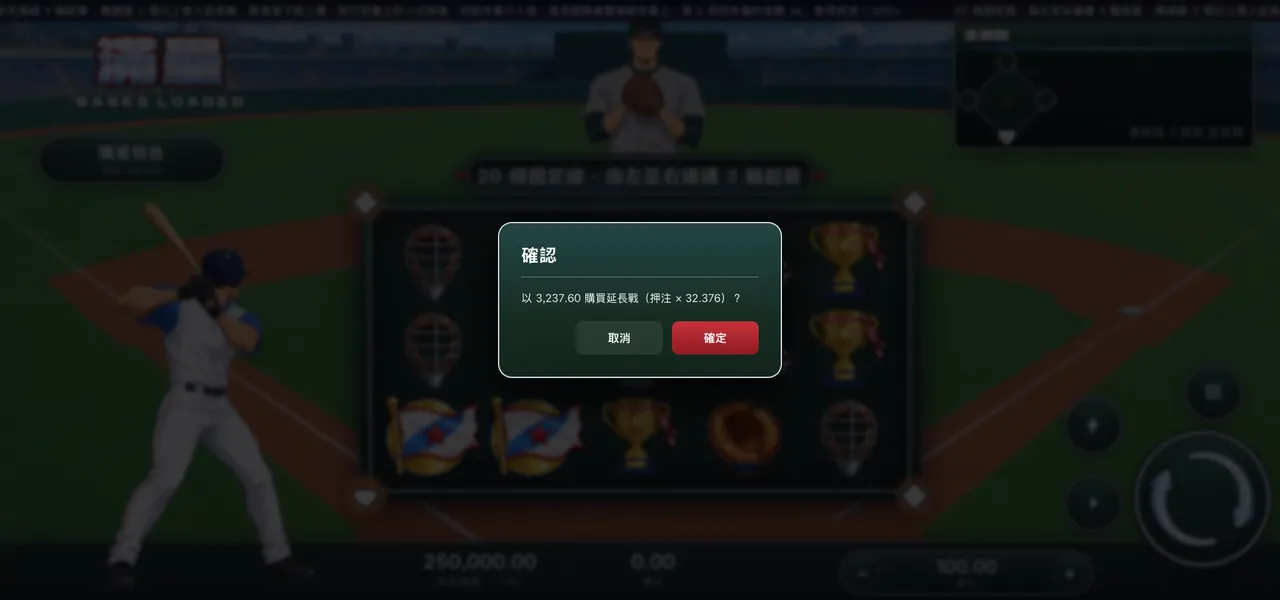
When enough cheer flags wave across the reels, a tied ballgame heads into Extra Innings. Here every spin counts as a new inning on the scoreboard, runners stay on base from inning to inning instead of clearing, and every runner who crosses home plate multiplies their cash prize by the current inning number. Stadium floodlights blaze against the evening sky as the tension builds with every runner held on the bags.
Best of all, if all three bases are loaded with runners after they take their bags and the spin's hits add up to four or more bases, the batter unleashes a Grand Slam — multiplying the payout of every runner driven home on that swing. Clearing the loaded bases with one towering swing is the moment every fan in the bleachers waits to see.
IV. Sunset Swings and the Outfield Billboard
On any base spin, the stadium lights can flare against a crimson sunset for the Home Run Derby. The slugger steps into the batter's box for a set of big swings, where each ball launched into the bleachers pays by its flight distance in metres — and a shot clear out of the park pays even more. White baseballs arc high into the twilight sky while the distance meter climbs with every crack of the slugger's bat.
Towering above the distant outfield wall beside the scoreboard stands a golden billboard. Drive a baseball straight into that outfield sign with a ringing clang, and the entire stadium rises to its feet as the derby awards its top jackpot prize outright. From a bases-loaded walk-off to a billboard-rattling blast, the ballpark echoes with the thrill of a championship night.