


The story
Fiction and adapted settings written by Akitsora Gaming for this title, including invented dialogue and events. This is not a historical or folklore reference. The rules and specification tables define the gameplay and math.
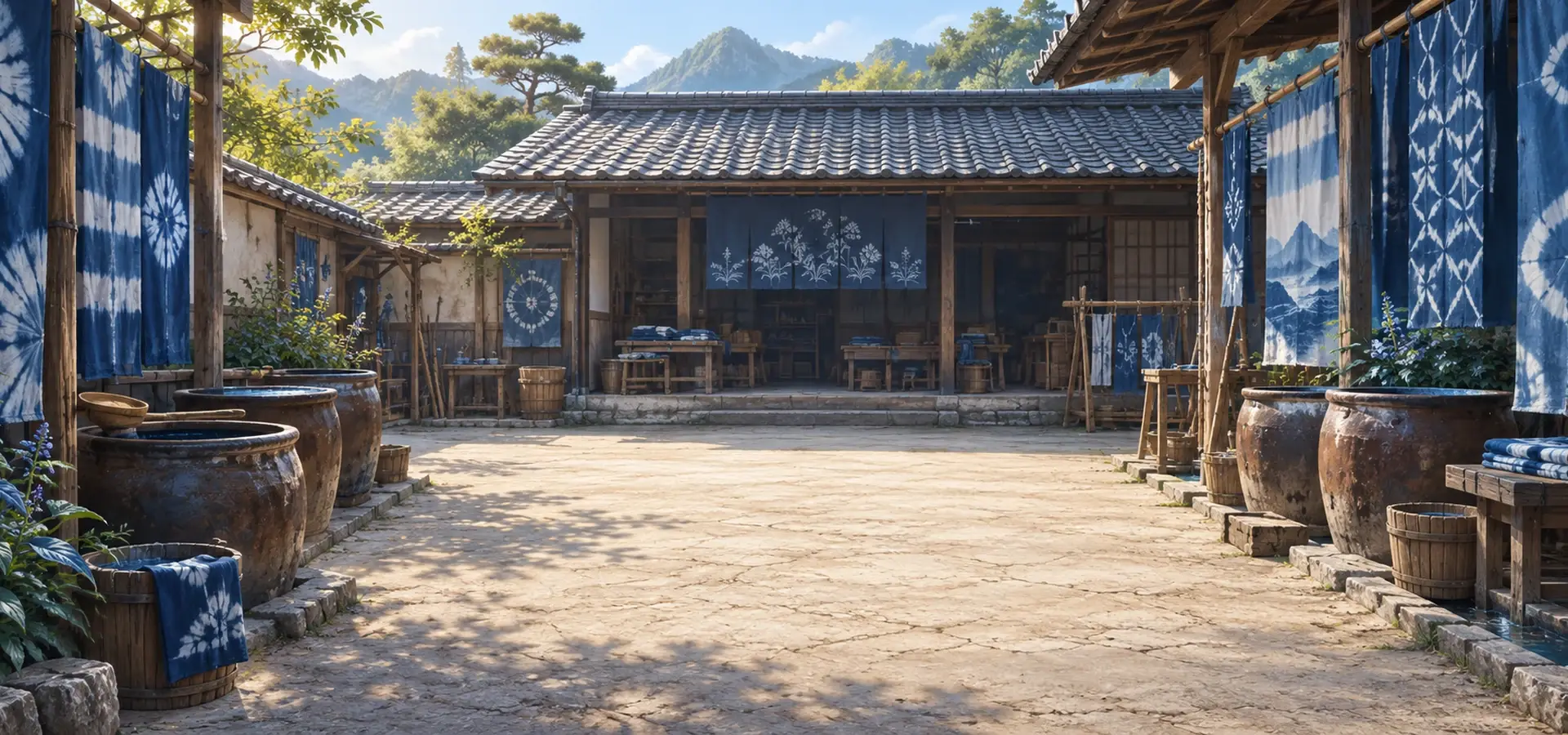
Under a clear sky, long strips of dyed cloth billow from tall bamboo poles.
Lifted fresh from the vat, the fabric turns from emerald green to deep indigo in the breeze.
I. Long Cloths Drying in the Sun
On a bright afternoon in a traditional dye workshop by the river, warm sunlight slants across rows of earthen fermentation vats sunk deep into the floor. The air carries the rich, herbal scent of dried indigo leaves, and outside in the sunny courtyard, freshly rinsed bolts of cotton ripple in the wind between high bamboo frames.
The reel grid itself is a wide sheet of cloth lifted dripping from the dye bath. Floating atop the richest vats is the Indigo flower — the violet-tinted foam that signals a healthy ferment — serving on the board as a wild symbol that links wooden mallets, bamboo clamps, and traditional dye tools.
II. Indigo Foam and Bound Knots
Before a cloth ever touches the vat, the artisan pinches and binds small gathers of white fabric with tight cotton thread in the ancient resist-dyeing art of Shibori knots. Whenever a bound white knot lands on the inner reels in the base game, it holds that square fast until the reels come to rest.
At the end of the spin, the binding thread is pulled away to reveal the undyed cloth beneath, opening into a crisp snow-white geometric blossom that acts as a wild symbol. Every untied knot bridges ways across the wet indigo fabric while ways that do not touch it pay as usual without being counted twice.
III. Ten Dips into the Deepening Vat
Gather enough compressed Indigo ball scatters on the board and the workshop begins Ten Blues. Japanese tradition names every gradation of indigo: the first dip yields the pale sky-tint of kamenozoki, and with each spin the cloth is dipped into the vat, lifted to oxidize in the air, and dipped again into deeper hues.
As the shade darkens spin by spin toward the nearly black majesty of kachiiro, the whole-board multiplier climbs step by step along the colour ladder. Every shibori knot that lands during the feature remains tightly bound in place for the whole round, holding its unstained white square while the surrounding cloth grows ever darker.
IV. Pulling the Threads to Reveal the Snow
On the final spin of Ten Blues, after the regular ways have been paid at the deepest shade achieved, comes The untying. The dyer snips every binding thread at once: all reserved knots across the board bloom into snow-white wilds together, and the entire grid is evaluated a second time — with an extra flourish if the knots form a classic snowflake, storm, or fawn-spot pattern.
The finished bolt of cloth unfurls in the afternoon sunlight, crisp white stars shining against midnight blue as the river breeze catches the hem. That final unveiling of the pattern is the artistry of the theme, not a promise: every spin's outcome is still decided independently by the RGS random number generator.