



The story
Fiction and adapted settings written by Akitsora Gaming for this title, including invented dialogue and events. This is not a historical or folklore reference. The rules and specification tables define the gameplay and math.
Zeus of the world below.
— Homer’s name for him
I. The cavern below
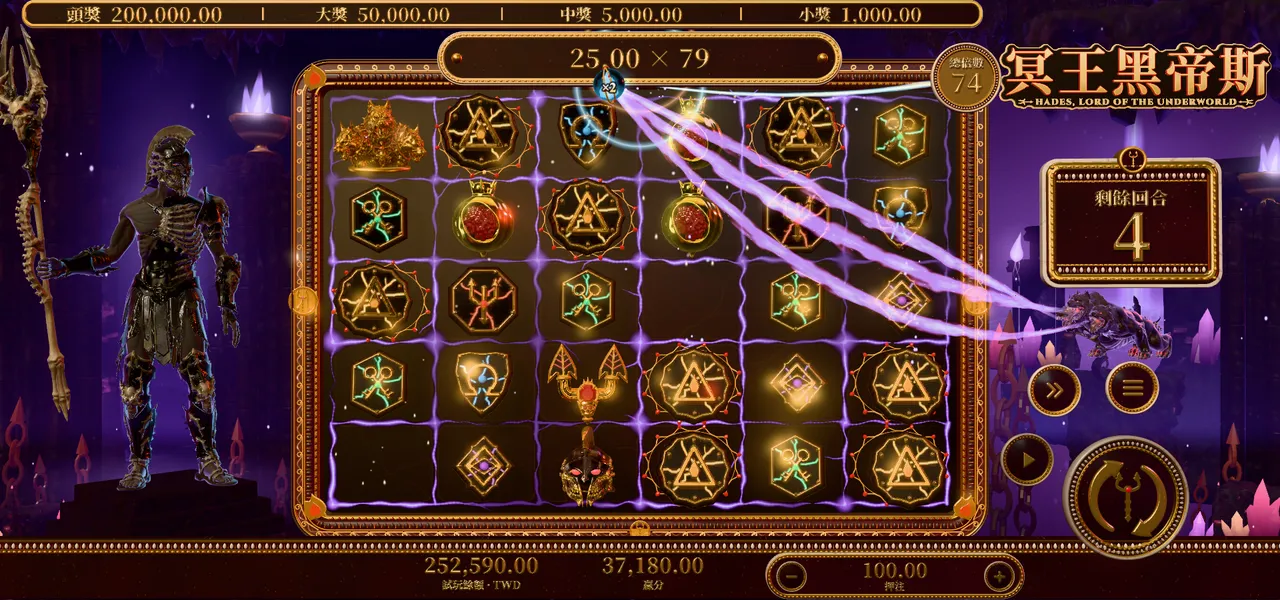
At the bottom of the world lies a cavern of lava: stalactites lit by firelight hang from the roof, a lava fall pours into a burning river in the distance, and the ferryman Charon’s boat drifts slowly across.
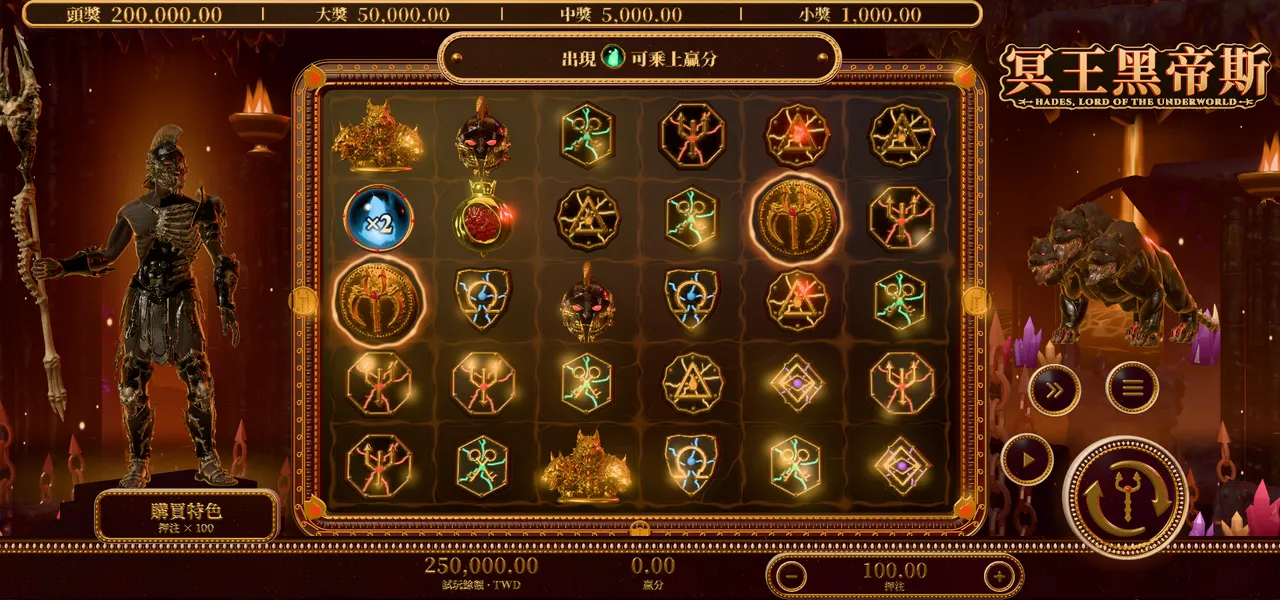
Hades stands on his obsidian plinth, armoured in black with his bident in hand, the lava haze behind him tracing his outline. On the other side of the board crouches Cerberus, all three heads watching.
II. Treasures of the underworld
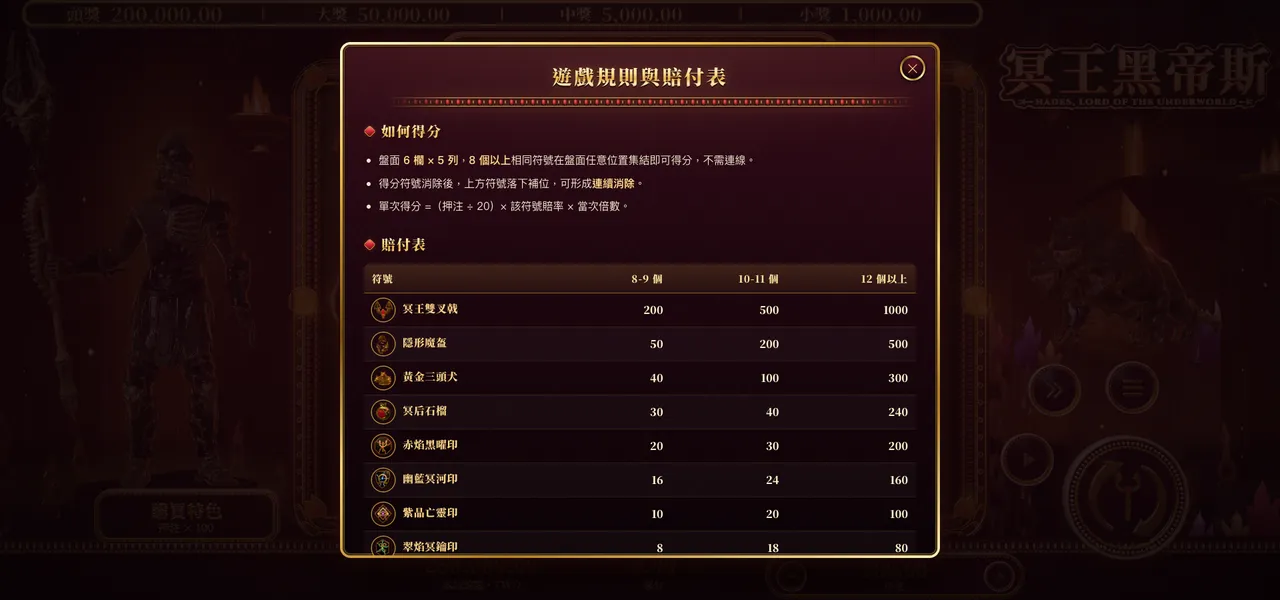
The underworld keeps the lord’s treasures: his bident, the helm of darkness, a golden Cerberus and Persephone’s pomegranate, and five obsidian seals veined with lava — crimson, Styx-blue, amethyst, emerald and molten gold.
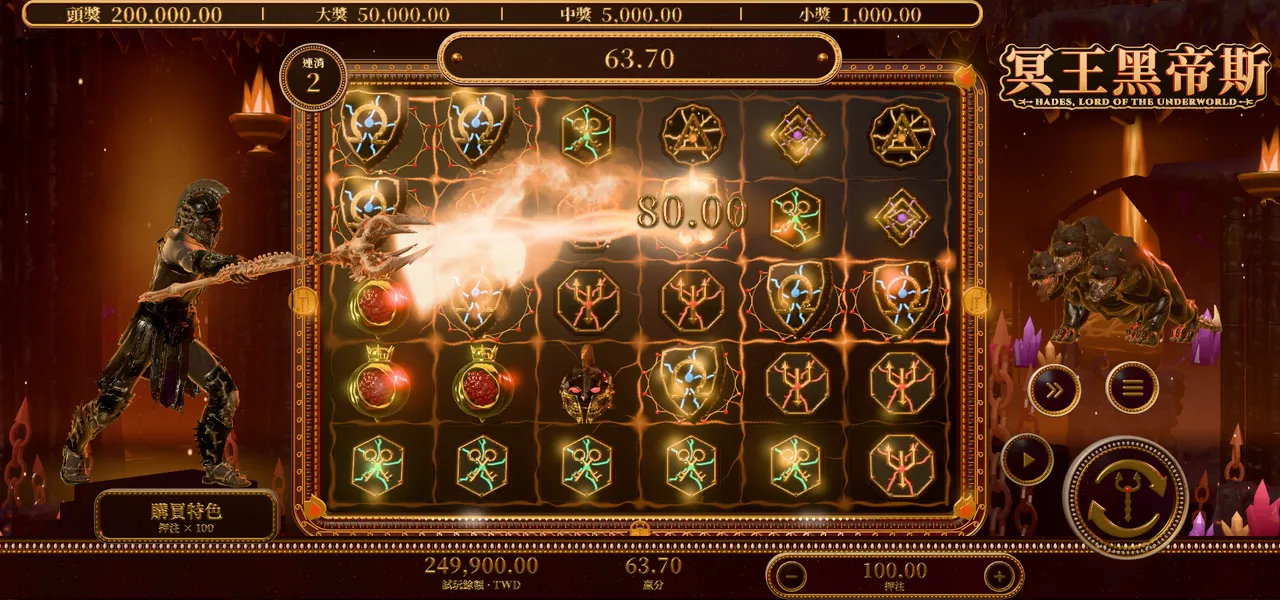
When 8 or more of the same treasure appear, the lord of the underworld strikes — they need not sit in a row. A stream of hellfire sweeps over them, the chosen treasures dissolve in the flames, and new ones fall into their places at once.
III. Soul orbs
Now and then an orb holding hellfire drops into the cavern. The hound at the gate rises and breathes fire from all three mouths, chasing the soul orb into the win — it counts only at the moment Hades chooses a treasure (×2 to ×20), then it is gone.
IV. The fire of the Styx
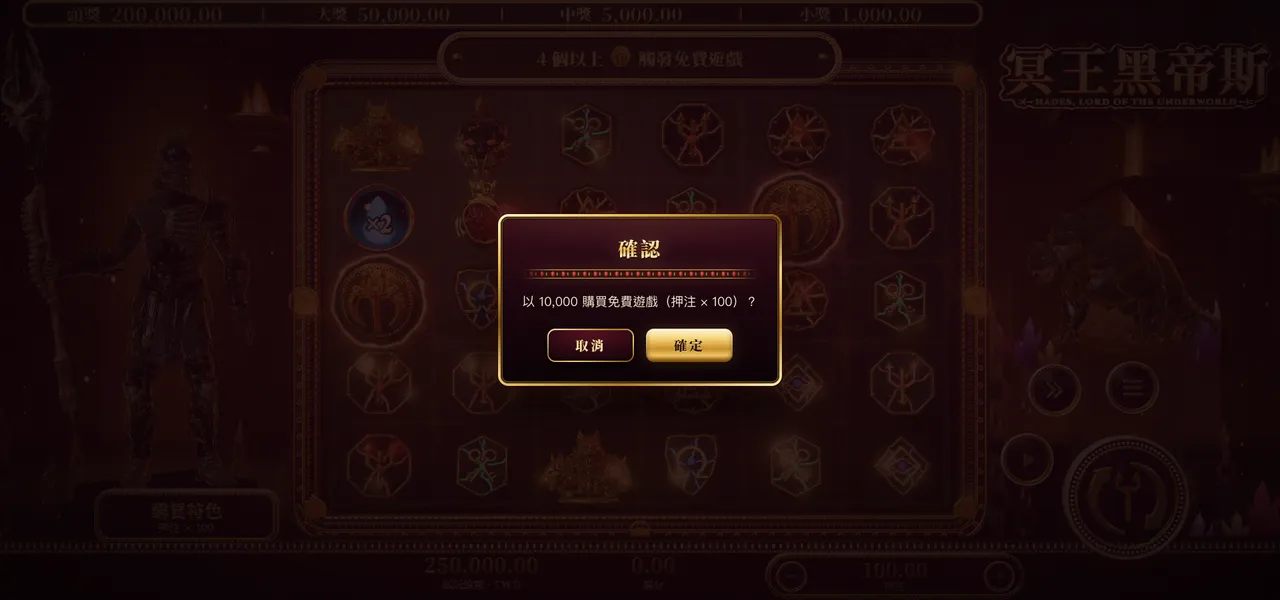
When 4 ferryman’s coins blaze at once — the fare the dead pay to cross — hellfire links them, Hades drives a bolt of fire into the ground, and the underworld’s flames turn from crimson-gold to the violet-cyan of the Styx.
Then one thing changes: every soul orb stays. The multipliers stack (×2 to ×500) and remain until the soul fire dies down.
Four gold plaques hang at the top of the cavern — Mini, Minor, Major and Grand.