




The story
Fiction and adapted settings written by Akitsora Gaming for this title, including invented dialogue and events. This is not a historical or folklore reference. The rules and specification tables define the gameplay and math.
Old friends from the ancient ink scrolls gather around the green felt table at midnight.
Before a single discard is drawn, tonight’s hand is already complete—Tenho.
I. A Midnight Table of Scroll Beasts
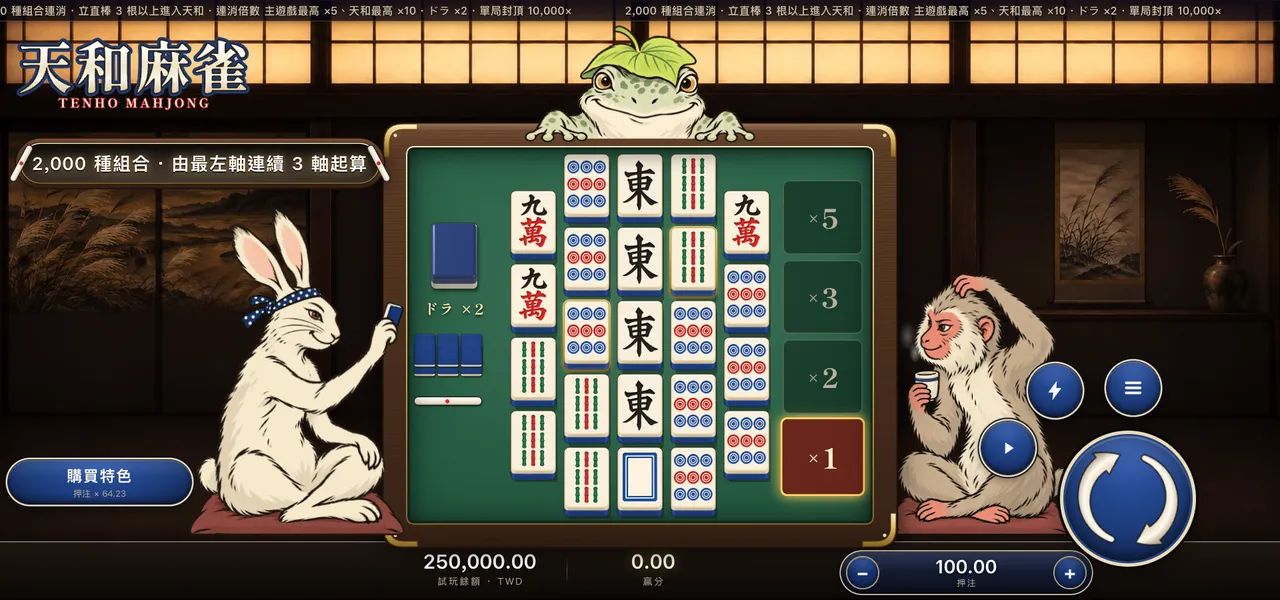
For eight centuries the lively creatures of the Chōjū-giga picture scrolls have wrestled, raced, and frolicked across ink-painted paper. Tonight they take their seats around a green mahjong table in a quiet tatami room: the frog across the felt beneath a taro leaf, the hare to the left in a spotted headband, and the monkey to the right cradling a teacup while saving the fourth seat for you.
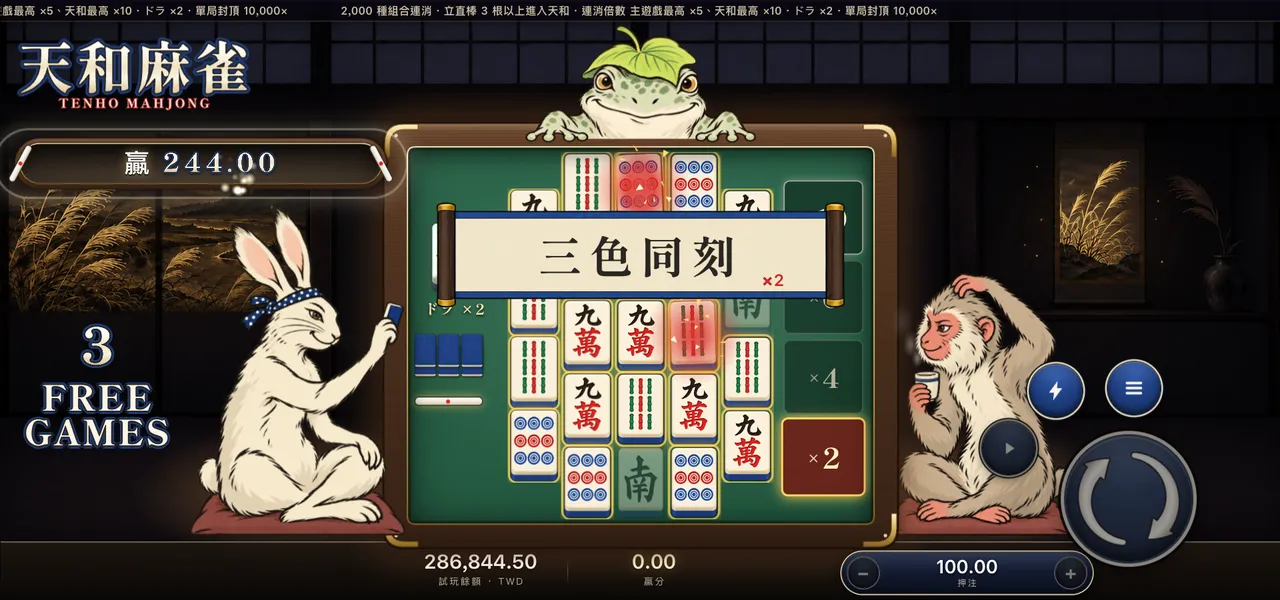
Warm lantern light filters through the carved wooden transom above as smooth tiles clack crisply into place across a five-reel, four-row all-ways board. Whenever matching bamboo, pin, character, or honor tiles connect on consecutive columns from the leftmost reel, the winning hand clears from the green mat and fresh tiles tumble down from above to continue the hand. Each draw and discard across the baize table sharpens the quiet suspense as veterans read the flow of the wall.
II. Calls of Pon, Chi, and Kan
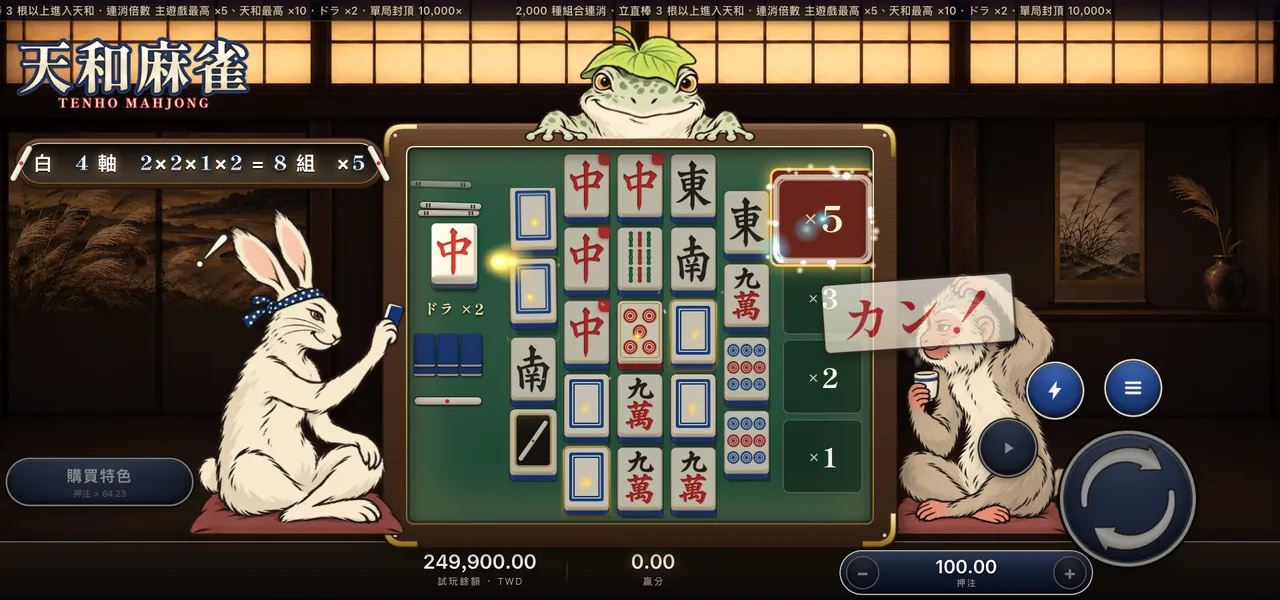
With every consecutive cascade within a single spin, your three scroll-painted companions take turns slapping the green mat and calling out—Pon! Chi! Kan!—driving the multiplier ladder above the table one step higher for each new wave of tiles that connects across the columns, turning a quiet midnight deal into a roaring table-side rally. Beneath the emerald glass lampshade, carved ivory and bamboo tiles click together with the unmistakable cadence of a classic parlor.
Tiles landing on the middle columns sometimes gleam inside a Gold Frame. When a gold-framed tile forms part of a winning way, it refuses to leave the table; instead, its gilded border cracks open in a flash and flips the tile into a Red Dora Wild that stays in place on the felt to substitute in the next cascade. Each draw and discard across the baize table sharpens the quiet suspense as veterans read the flow of the wall.
III. The Dora Wall and Riichi Sticks
True to Japanese riichi mahjong, a single indicator tile can turn an ordinary hand into a table-shaking score. Before every spin begins, the wall to the left of the grid flips face up to reveal that round’s Dora tile, doubling every winning combination of that tile on top of the active cascade multiplier ladder. Beneath the emerald glass lampshade, carved ivory and bamboo tiles click together with the unmistakable cadence of a classic parlor.
When the cascades finally settle and enough red-dotted Riichi Sticks rest upon the felt, the room hushes and the Tenho free-spins feature begins. Inside Tenho, gold-framed tiles appear far more often on the middle columns and every rung of the cascade multiplier ladder climbs to much greater heights across the entire round. Each draw and discard across the baize table sharpens the quiet suspense as veterans read the flow of the wall.
IV. Tenho and the Yakuman Scroll
In traditional mahjong, Tenho—a dealer’s hand already complete the instant the initial fourteen tiles are dealt—is among the rarest miracles at the table. As the feature opens, a full row of fourteen tiles topples face up along the bottom edge of the screen to salute the blessing of the opening deal. Beneath the emerald glass lampshade, carved ivory and bamboo tiles click together with the unmistakable cadence of a classic parlor.
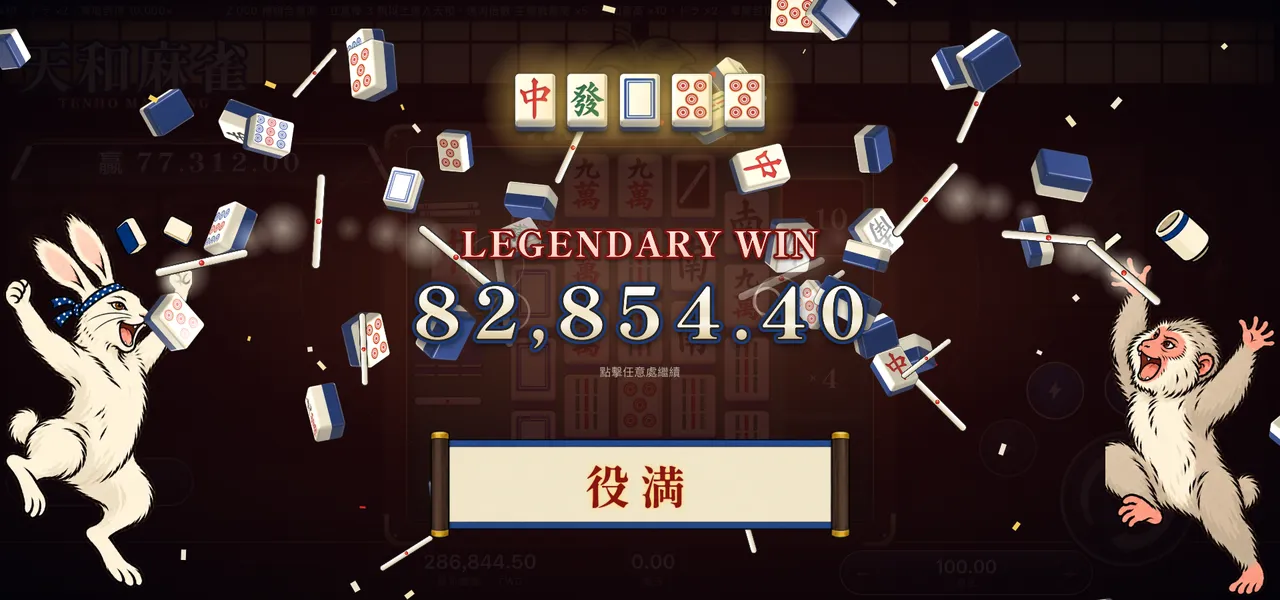
Score with the red, green, and white dragon tiles in the very same cascade and the bold call of Daisangen flashes across the room; climb all the way to the top step of the Tenho multiplier ladder on a winning cascade, and the hare, frog, and monkey slam the table and leap to their feet as the golden Yakuman scroll unrolls.